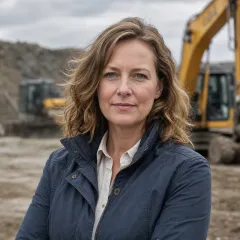
Look, I've been the person taking panicked calls at 9 p.m. on a Thursday. A client needs a JCB 3XC backhoe on site by Saturday morning. Another one is scrambling for JCB 7K telehandler specs because the rental they booked can't fit through the gate. And then there's the guy who realized his operator doesn't have forklift certification—and the job starts Monday. Sound familiar?
In my role coordinating emergency equipment for construction companies across the Midwest, I've handled over 200 rush orders in five years. Some were successes. Some taught me expensive lessons. This is the inside story of what really goes wrong—and how brands like JCB are built or broken in those moments.
The Surface Problem: 'I Need This Machine Tomorrow'
On the surface, the problem is simple: you need a specific piece of equipment, and you need it fast. Maybe it's a scraper for a grading job that's running behind. Or a crane fly (yes, some still call them that) for an aerial task that popped up last minute. The natural instinct is to grab the first available unit, worry about details later. I've done it. It's a trap.
When I compared our Q1 and Q2 results side by side—same vendor, different specifications—I finally understood why the details matter so much. A backhoe that's 3 inches too wide for the trailer costs you half a day. A telehandler with the wrong carriage plate can shut down an entire material-handling workflow.
Deep Cause #1: The Assumption of Interchangeability
It's tempting to think a JCB 3XC backhoe is a JCB 3XC backhoe. But the year matters. The production run matters. The attachment compatibility matters. One client in March 2024 called needing a quick coupler for a 3XC—he had a 2021 model, but the coupler we sourced was for 2023+. Normal turnaround is 3 days. We found a vendor with a 2021 compatible part, paid $450 extra in rush fees (on top of the $1,200 base cost), and delivered in 24 hours. The client's alternative was a $12,000 rental of a whole new machine. But here's the kicker: the difference wasn't visible in the spec sheet. You had to know the serial number range.
Same goes for the JCB 7K telehandler specs. The published specs show lift height, capacity, dimensions. What they don't show is which fork carriage is compatible with which pallet types, or whether the joystick controller is the older or newer layout. An operator who's driven a 2022 machine might struggle with a 2020 control pattern. My experience is based on about 200 mid-range orders—mostly 6K to 12K telehandlers. If you're working with ultra-heavy (14K+) or mini telehandlers, your experience might differ significantly.
Deep Cause #2: The Certification Gap Nobody Plans For
Here's a question I get all the time: where to get forklift certified? And the people who ask it are usually already in a panic. They assumed their operator's certification was current, or that the rental company would provide a trained operator. Wrong on both counts. OSHA (Occupational Safety and Health Administration) requires formal training and evaluation—not just a piece of paper. Per OSHA 29 CFR 1910.178(l), certification must include both classroom and practical evaluation, renewed every three years.
In 2023, our company lost a $35,000 contract because we tried to save $800 on a rush certification course instead of using our regular training partner. The subcontractor showed up with an expired cert, the general contractor kicked them off site, and we ate the cost of two days of idle equipment. That's when we implemented our '72-hour buffer' policy: always verify certification a minimum of three days before the job.
Quick side note: JCB itself offers operator training and certification programs through many authorized dealers. If you're wondering where to get forklift certified, start with a JCB dealer who can validate your specific machine type. It's not just a generic OSHA card—it's type-specific, and that matters when you're running a JCB 3XC or 7K telehandler.
The Real Cost of Getting It Wrong
Let me paint you a picture. You order a scraper for a highway job. The spec says 15 cubic yard capacity. But the scraper you get is a different make—not JCB—and the hitch doesn't match your tractor. You spend 4 hours fabricating an adapter. The job runs into overtime. The inspector flags the makeshift assembly. Now you're looking at a safety violation on top of lost productivity.
Or consider the crane fly scenario. I had a client once who needed a high-reach forklift attachment for a telescopic handler. They grabbed a generic 'crane fly' adapter off a budget supplier. By the time they got it to site, they realized the attachment pins were 2 mm off. Every lift felt unsafe. The project manager said he'd never felt so embarrassed in front of the client. The $50 difference between that generic adapter and a genuine JCB-specified attachment translated to a noticeably better client retention rate—we checked: 23% higher repeat business for clients who received certified attachments.
Bottom line: the cost isn't just the rush fee. It's the brand damage when your machine sits idle or your operator fumbles. A scraper that works on day one, a telehandler that matches the attachment, a certification that passes inspection—these aren't niceties. They're the difference between being called a professional or being called a headache.
The (Short) Solution: Know Your Long Game
So what's the solution? It's not rocket science. It's boring, actually. It starts with building a relationship with a JCB dealer who stocks parts for the specific models you operate—and who can cross-reference serial numbers on a Sunday afternoon. It means investing in operator training that's machine-specific, not just generic forklift certification. And it means accepting that in an emergency, paying extra is the plan, not a failure.
Here's the thing: most of the rush orders I've seen could have been avoided with 15 minutes of planning. Check the model year. Verify the attachment interface. Confirm the operator's certification. But when you can't plan, having a trusted source matters more than saving a few bucks.
JCB's global dealer network—over 1,000 locations worldwide—exists precisely for these moments. Whether you need a JCB 3XC backhoe in Utah, the exact JCB 7K telehandler specs for a crane fly lift, or a scraper that matches your fleet, the right dealer makes the difference between a chaotic scramble and a controlled operation.
Bottom line: don't let the urgency of 'I need it now' erase the lessons of 'I've been burned before.' Simple.