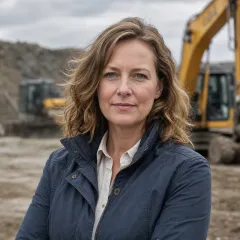
Why I'm the person writing this
I coordinate equipment deliveries for contractors. I'm the one who answers the phone when a machine isn't on site and a shift starts in 12 hours. In March 2024, a client called at 7 p.m. needing a loader for a 6 a.m. pour. He was deciding between a new JCB electric forklift and used JCB backhoes from a private seller that could deliver by morning.
We made the call. The decision process, not the specific machine, is what I want to share with you.
Here's the thing: a Skullcandy Crusher ANC 2 can be the best headphone you've ever owned, or it can sit in a drawer because the clamping force bothers you. Same with JCB. The badge on the side doesn't tell you if the machine fits your work.
The comparison framework
I've coordinated maybe 300 rush orders—or rather, 280 in the system, plus a handful of walk-ins too messy to log. In that time, I've learned to compare machines on four dimensions:
- Total cost of ownership, not sticker price.
- Site versatility: what the machine can do beyond lifting.
- Downtime risk: how fast you can get it fixed.
- Operator reality: cab, controls, daily maintenance.
If a dimension ends with 'it depends,' you haven't got enough information yet. I'll give you a clear call on each one.
Dimension 1: Total cost of ownership
A used JCB backhoe can look like the smart money. The purchase price is lower than a new JCB electric forklift, and you don't need charging infrastructure. But the cheaper machine can burn more in diesel and repairs than the difference in purchase price.
I've seen it on both sides. Last quarter alone, we processed 47 rush orders, and the machines that broke down on site were almost all older diesels—not because diesels are bad, but because maintenance records were missing. A 4,000-hour backhoe with no service history is a landmine.
What most people miss about running costs
An electric forklift has fewer moving parts in the drivetrain. But it still has hydraulic oil, wheel bearings, brake fluid, and a battery pack that will eventually degrade. Battery replacement cost is not a rumor; it's a line item. Ask for the replacement price in writing before you buy.
Per the FTC Green Guides, environmental claims like 'low emissions' must be truthful, not misleading, and supported by evidence. Source: ftc.gov/green-guides.
Why does this matter? Because 'zero emissions' can mean different things depending on where your electricity comes from. The electric machine is cleaner on site, no doubt, but the full lifecycle depends on your local grid and battery life.
My call: If 80% of your work is within reach of a charger, the JCB electric forklift can win on five-year cost. If you work in remote areas without reliable power and need an all-day machine, the used JCB backhoe is the only real option—even with higher maintenance costs.
Dimension 2: Site versatility
This is where the backhoe loader shines. It can dig, load, lift, carry attachments, and move across rough terrain. An electric forklift is a champion on pavement and smooth hardstanding, but you won't dig a footing with it.
Consider scale. Knowing how to mix concrete in a bucket is a legitimate skill; for a small repair, a bucket and a drill mixer can get you through. But a 40-foot retaining wall needs machines. A used JCB backhoe can move the dirt and place the concrete bucket. An electric forklift can lift pallets of block to the right floor level with way less effort.
And an engine hoist? Buy one for the workshop. It will pull a diesel engine out of a truck in an afternoon, but it won't get through mud to a pour site. Different tools, different jobs.
The surprise came during a rush job in 2023. A client found out their material supplier dropped pallets on the wrong side of a locked gate. The JCB electric forklift slipped through a narrow opening, lifted pallets over a curb, and stacked them in under an hour. A backhoe would have done the same job slower and torn up the sidewalk.
My call: The used backhoe is more versatile for dirt work. The electric forklift is better for palletized material handling. Buy the backhoe if you dig at least a few days a month; otherwise you're paying for muscle you'll rarely use.
Dimension 3: Downtime risk and the parts nightmare
When I'm triaging a rush order, the first question is never 'which is faster.' It's 'which one can I get parts for by tomorrow morning?'
I didn't always believe this. In 2023, a client ignored the dealer-network advice and bought a used backhoe from a private seller because the price was right. A hydraulic line went bad on a Thursday afternoon. The part took five days to arrive. That client paid $3,400 in standby labor and admitted the savings weren't worth it. Since then, our policy is simple: any machine deployed in an emergency must have a parts path within a day.
JCB's dealer network is solid in most areas—but 'most' isn't 'your area.' Before buying, call the local dealer and ask three questions. Do you stock the hydraulic hoses? How long for a charger part? How many days for a backhoe transmission seal? Then assume every answer is optimistic.
My call: A new JCB electric forklift with a nearby dealer usually has the edge on reliability because it's under warranty. But electrical faults can take longer to diagnose than a broken diesel part. If your nearest dealer is hours away, a used backhoe with an independent mechanic down the road might be safer.
Dimension 4: What your operator actually thinks
This is the dimension that almost nobody includes in a spreadsheet. You can compare specifications all day, but the operator sits in the cab for eight hours. The JCB electric forklift is quieter and doesn't smell like diesel. The used backhoe might have a cab that's been through three operators and a lot of dust.
Don't buy based on one test drive. I've seen operators love a machine on a smooth dealer lot and hate it on a real site. It's like the Skullcandy Crusher ANC 2: the specs are solid, but fit is personal. If the joystick position is wrong for your operator's arm, no horsepower figure will make up for it.
Daily checks separate the two machines too. Electric forklift operators check battery, tires, and charging area. Backhoe operators check oil, coolant, grease points, and a pile of other things. If your crew won't follow a greasing schedule, you'll be the one paying for it.
My call: If you want to keep hired operators happy, the electric forklift is the more comfortable daily ride. If your people already run older iron and know how to maintain it, the backhoe won't scare them.
How to decide without regret
Let me make this practical. Choose used JCB backhoes if:
- You dig, trench, or backfill more than a couple of days per month.
- You don't have reliable access to charging infrastructure.
- You have a mechanic who can keep a diesel machine alive.
Choose a JCB electric forklift if:
- Most of your work is pallets, stacked material, and paved surfaces.
- You want lower daily maintenance and a quieter site.
- You can plan battery charging and your dealer is close enough for support.
And if the job is genuinely small, don't buy a machine at all. Learning how to mix concrete in a bucket and owning a basic engine hoist will cover a surprising number of small repairs. Rent a bigger machine for the days that demand it.
Before you sign anything, get a demo. Run the machine through your actual workflow. If a company can produce a Skullcandy Crusher ANC 2 that some people swear by and others return, a construction machine is guaranteed to have the same split. Fit matters.
The bottom line
The JCB name on a machine means you're starting with solid engineering. But a JCB electric forklift and used JCB backhoes are different tools with different costs and risks. The backhoe wins on rough-site versatility. The electric forklift wins on daily cost, comfort, and lower risk—when the job fits.
The machine you pull up in is part of your brand. The client sees it before you shake hands. I'm not saying you need a new machine for every job; I've sent used machines to sites that cared about function, not paint. But the condition of that equipment reads as the condition you'll treat their project. That's not sentiment. It's client perception.
So here's my final advice: choose the machine you can get parts for, the one your operator can handle, and the one your jobs actually need. That's the one that will keep you out of my emergency line.