I'm going to say something that might upset a few sales managers: a customer who orders one machine deserves the same pre-delivery inspection as a customer who orders ten. That isn't a nice-to-have. It's the only way to run quality without lying to yourself. And in the construction equipment business, I've seen JCB take small customers seriously—if the dealer does their job.
My job, and why this matters
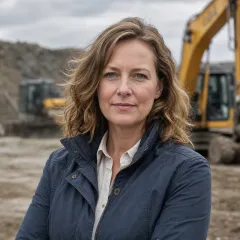
I'm a quality/compliance manager for a JCB dealer in the Mountain West. I review every machine before it reaches a customer—roughly 300 units a year. I sign off on backhoe loaders, telehandlers, excavators, skid steers, forklifts, and occasionally a compact loader. My favorite part of the week is the pre-delivery inspection, because that's where an order becomes an experience.
In Q1 2024, I rejected about 4% of first deliveries. Most were for minor transport damage or incomplete paperwork. The repairs were cheap. The lesson was not. If I had let those units through because the buyer was just a small contractor, the damage would have turned into a relationship problem, not a parts problem.
The small order test
Before I worked in heavy equipment, I spent two years in final QA at a small goods distributor. We shipped promotional accessories, replacement parts, and all kinds of light products. I remember rejecting an entire lot of bucket hats because the stitching density didn't match the approved spec. A bucket hat seems simple until you measure the stitching. The customer had ordered a modest quantity—nothing that would impress a production manager. But the order was serious to them. We didn't ask the customer to accept good enough. We redid it.
Another time, we had a shipment of nail drills where the coating looked right but the measurement tolerance drifted after the first 1,000 units. A nail drill is a precision tool, even when it's for a nail salon. Same logic applies to a JCB all terrain forklift: if the spec says a machine has a rated capacity at a particular load center, you don't shrug when the machine is off by five percent. You fix it.
Honestly, I'm not sure why some buyers assume small orders are easier to ignore. My best guess is that salespeople measure effort against commission. Quality people don't work that way. We measure against a standard, not an invoice total. I've sat in meetings where a rep tried to justify skipping a final check because the order was too small to matter. I stopped those meetings. Once you allow that kind of thinking, it spreads to every order.
Why I like the JCB 940 forklift for small operators
When a small contractor asks me what to buy, I often point to the JCB 940 forklift. It's not the biggest machine, and that's the point. The JCB 940 forklift is popular because it gives an operator a useful combination of reach and lift in a footprint that fits tighter yards. You don't need a full-time crane operator to justify it, and you don't need a huge service bay. It's also easier to get parts for, because the JCB dealer network is built around the machines that actually sell. That makes it a natural fit for a company that is growing.
I also like the JCB all terrain forklift for sites where the ground is not a clean concrete slab. If you're working on slopes or unpaved ground, an all terrain forklift gives you better traction and stability. The safety rules don't change, but the margin for error improves.
Looking back, I should have pushed for more photos from the transport company when I first started. At the time, I thought it would slow delivery. It would not have. The surprise wasn't that a compact unit sold well. It was how much hidden value came with proper delivery paperwork and a clear walkaround.
How to drive a forklift: the part nobody skips safely
One thing I tell every small contractor: don't learn to drive a forklift from a friend. The Occupational Safety and Health Administration requires formal training before you operate a powered industrial truck, including a forklift, under 29 CFR 1910.178. That's not a suggestion. I've seen near misses on job sites where someone just hopped on a machine. It doesn't matter if the machine is a JCB 940 forklift or a JCB all terrain forklift—the rules apply.
If you're looking for a quick how to drive a forklift summary, start here:
- Inspect the machine before use: tires, forks, mast, lights, horn, and load chart.
- Wear your seatbelt. If the machine has a falling-object protective structure, keep it up.
- Know your load center. A load that looks small can exceed capacity if it's bulky.
- Travel with the forks low, about four to six inches off the ground.
- Never carry passengers.
- Look in the direction of travel. On a rough site, a JCB all terrain forklift gives you more clearance, but it won't drive itself.
OSHA also expects employers to evaluate each operator's performance at least once every three years, and refresher training is required after an incident or an observed unsafe operation. That part matters for small contractors because there isn't a safety department watching every move. The operator has to be the safety department. And if you're running a one-person operation, that also means checking your own habits after a long day. Fatigue is a bigger hazard than most people admit.
What about the margin problem?
I hear the objection every time I bring this up: small orders have the same paperwork cost as big orders, so they're less profitable. I get the math. But that's a sales problem, not a quality problem. If a dealer doesn't want to serve a one-machine buyer, that's a business choice. What I object to is pretending the machine that was good enough for a small contractor was held to a lower standard. There is no lower standard. The cost of a wrong handover is different for a fleet buyer than for a small contractor. A fleet can park a bad machine for a day. A small contractor can lose a week of work and a customer.
Once, my spreadsheet said to recommend a base model for a small landscaping company because the price was lower. My gut said the JCB all terrain forklift would serve them better because their job site was a hillside. I went with my gut. Two months later, the owner called to say the machine was the reason they could save a crew member from shoveling. That's not a sales statistic. It's just proof that good recommendations don't depend on order size.
There's something satisfying about handing over a machine to a small contractor who is nervous about their first purchase. After all the inspection, the paperwork, and the training, seeing them drive off with a grin—that's the payoff. The best part is not the sale. It's knowing I didn't take the easy path.
The standard doesn't shrink with the invoice
The next time you compare quotes, remember: you are not buying a favor. You are buying a machine that has to be safe, documented, and fit for purpose. If you're financing a machine, the lender cares about the serial number and the value. The person who has to operate it cares about the small details. Both deserve the same machine. Whether that machine is a JCB 940 forklift, a JCB all terrain forklift, or a station wagon with a trailer hitch, the requirements don't change because the customer is small. Small doesn't mean unimportant—it means potential.